
Frontotemporal Dementia
A progressive brain disorder affecting personality, behavior, and language — often striking adults in their 40s, 50s, and 60s. Understanding FTD is the first step toward better care.
What Is Frontotemporal Dementia?
Frontotemporal dementia (FTD) is a group of brain disorders caused by progressive nerve cell loss in the brain's frontal and temporal lobes — the areas responsible for personality, behavior, language, and decision-making. Unlike Alzheimer's disease, FTD often strikes people in their 40s and 50s, making it one of the most common causes of early-onset dementia.
Because FTD primarily affects behavior and personality rather than memory in its early stages, it is frequently misdiagnosed as a psychiatric condition — depression, bipolar disorder, or even schizophrenia. This makes psychiatric expertise especially important in the evaluation and ongoing management of FTD.
Why Psychiatric Expertise Matters
- FTD is frequently misdiagnosed as depression, bipolar disorder, or schizophrenia
- Behavioral symptoms often appear years before memory loss
- Psychiatric medication can reduce agitation, impulsivity, and distress
- Caregiver support is as important as patient care
- Early diagnosis enables better planning and safety
Types of Frontotemporal Dementia
FTD is an umbrella term covering several distinct syndromes, each affecting different brain regions and presenting differently.
Behavioral Variant FTD (bvFTD)
The most common form. Marked by dramatic changes in personality and behavior — impulsivity, apathy, loss of empathy, socially inappropriate actions, and poor judgment — often before any memory loss appears.
Semantic Variant PPA
A language-led form where the person gradually loses the ability to understand or recall the meaning of words, while speech fluency remains intact. Reading and writing are also affected over time.
Nonfluent/Agrammatic Variant PPA
Affects the ability to produce speech — words come out slowly, with effort, and grammar deteriorates. Comprehension of single words is usually preserved in early stages.
FTD with Motor Neuron Disease
Some people with FTD also develop motor neuron disease (similar to ALS), combining cognitive and behavioral changes with progressive muscle weakness. This variant tends to progress more rapidly.
Recognizing the Signs of FTD
FTD symptoms depend on which part of the brain is affected first. Behavioral changes are often the earliest and most striking signs — and the ones most likely to be mistaken for a psychiatric disorder.
Behavioral & Personality Changes
- Sudden loss of empathy or concern for others
- Socially inappropriate or disinhibited behavior
- Apathy, withdrawal, and loss of motivation
- Impulsive or compulsive actions
- Poor judgment and decision-making
- Changes in eating habits (overeating, food fixations)
- Repetitive or ritualistic behaviors
Language & Communication Changes
- Difficulty finding words or naming objects
- Slow, halting, or effortful speech
- Loss of word meaning or comprehension
- Reduced vocabulary and shorter sentences
- Eventual loss of speech in later stages
A Famous Face Behind the Diagnosis
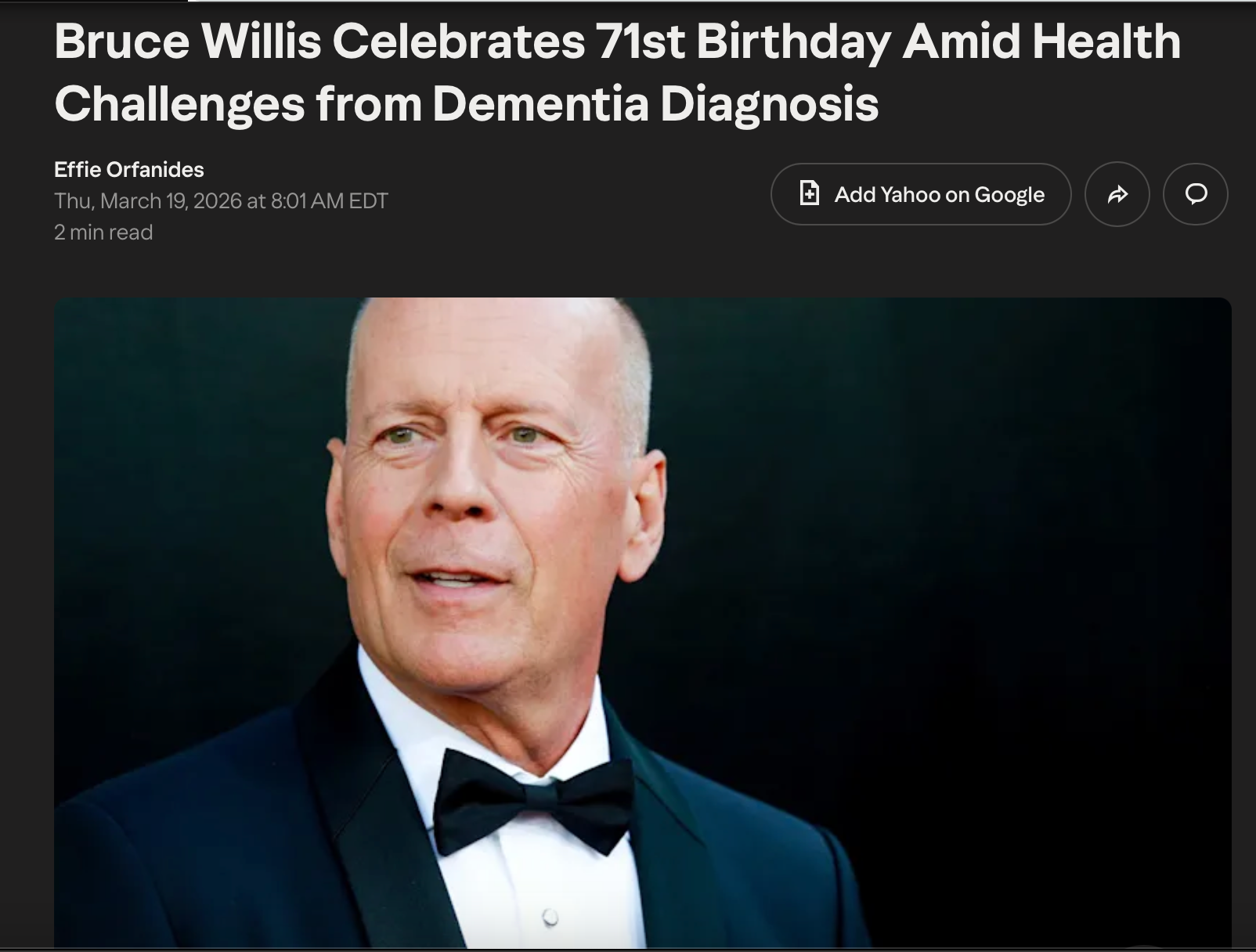
Source: Yahoo Entertainment — "Bruce Willis Celebrates 71st Birthday Amid Health Challenges from Dementia Diagnosis" by Effie Orfanides, March 19, 2026.
In 2022, actor Bruce Willis — known worldwide for his roles in Die Hard, Pulp Fiction, and The Sixth Sense — announced he was stepping away from acting due to aphasia. In 2023, his family revealed the underlying cause: frontotemporal dementia. Willis was diagnosed in his late 60s, and his family has spoken openly about the challenges of navigating FTD — from the initial misunderstandings to the daily realities of care.
His diagnosis brought unprecedented public attention to FTD, a condition that had long been overshadowed by Alzheimer's disease. The Willis family's openness has helped millions of families recognize symptoms earlier and seek the right support.
We hope that by sharing this, we can raise awareness of this little-known disease and shine a light on the many challenges families face.
— The Willis Family, 2023
How FTD Is Diagnosed
Diagnosing FTD requires a comprehensive evaluation that goes beyond a standard memory test. Because early FTD often mimics psychiatric conditions, a thorough psychiatric assessment is a critical part of the diagnostic process.
Psychiatric & Behavioral History
A detailed review of behavioral changes, personality shifts, and any language difficulties — including input from family members who have observed the changes firsthand.
Neuropsychological Testing
Standardized cognitive assessments that evaluate executive function, language, memory, and social cognition to identify patterns consistent with FTD.
Brain Imaging
MRI or PET scans can reveal atrophy or reduced activity in the frontal and temporal lobes, helping distinguish FTD from Alzheimer's and other dementias.
Ruling Out Psychiatric Conditions
Because FTD is so often mistaken for depression, bipolar disorder, or OCD, a careful psychiatric evaluation is essential to ensure the right diagnosis and avoid years of ineffective treatment.
Managing FTD: What Psychiatric Care Can Offer
There is currently no cure for FTD and no medications proven to slow its progression. However, psychiatric care plays a vital role in managing the behavioral and psychological symptoms that cause the most distress for patients and families.
Behavioral Symptom Management
Medications such as SSRIs and antipsychotics can help reduce agitation, impulsivity, compulsive behaviors, and depression associated with FTD.
Caregiver Education & Support
Helping families understand why their loved one is behaving differently — and how to respond — reduces conflict, caregiver burnout, and unnecessary distress.
Safety Planning
As judgment and impulse control deteriorate, proactive safety planning — driving, finances, living arrangements — becomes an essential part of care.
Coordination of Care
Psychiatric care works alongside neurology, speech therapy, and social work to create a comprehensive, coordinated plan that evolves as the disease progresses.
Frequently Asked Questions
Supporting FTD Families Across Florida
If you or someone you love is showing signs of frontotemporal dementia — or has already been diagnosed — psychiatric support can make a meaningful difference. Razvan Gheorghe, PMHNP-BC, provides compassionate, expert care via telehealth across Florida.